
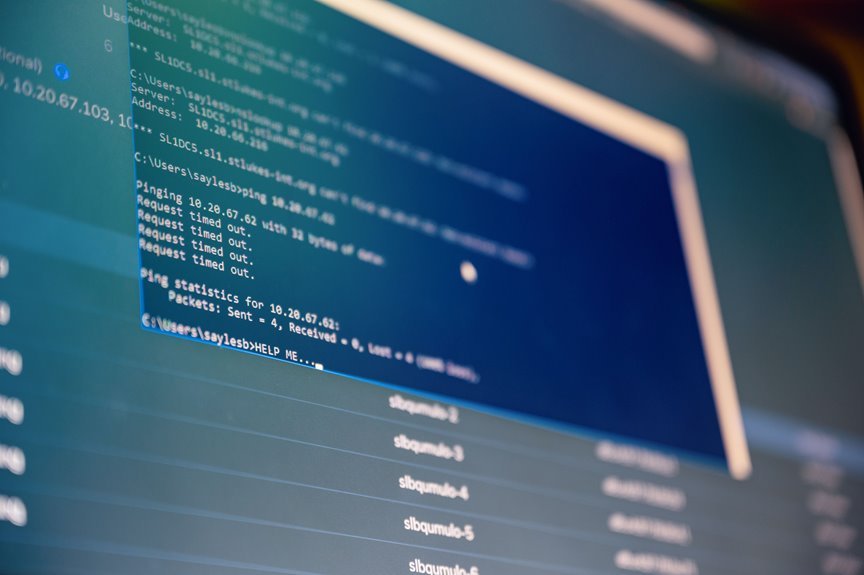
The Network Routing Behavior Analysis & Validation File—9047301368, 6036075554, 4163012661, 4694663041, 8327064654 documents how routing decisions align with declared policies and operational standards. It presents structured sections, timestamps, and data formats to enable precise interpretation and anomaly detection. The work supports automated validation, continuous monitoring, and auditable reconciliation of observed traffic with policy intent. It offers a disciplined framework for reliability, governance, and resilience, inviting examination of methods and outcomes to identify gaps and improvements.
What Network Routing Behavior Is and Why It Matters
Network routing behavior refers to how data packets traverse a network from origin to destination under defined protocols, policies, and topologies. It is analyzed to reveal performance, reliability, and security implications.
Ambiguous routing can obscure decision points, while policy drift may erode intent over time. Understanding these dynamics clarifies control objectives, supports verification, and underpins resilient, freedom-preserving network design and operation.
How to Read and Interpret the 9047301368… File Contents
The 9047301368… file contents represent a structured artifact intended to document routing behavior for validation purposes; reading it requires a disciplined approach to decode its sections, data formats, and intended interpretations. The document fosters disciplined interpretation nuances and clear policy mapping, guiding analysts through standardized fields, timestamp semantics, and relation to global routing objectives without conflating policy intent with operational anomalies.
Validating Routes: Methods to Match Real Traffic Against Policy
Validating routes requires a disciplined comparison of observed traffic with declared policy, using implementable criteria that isolate policy intent from operational variance. The approach systematizes measurement, leveraging logged flows, route maps, and policy references to detect deviations. Access control and traffic blacklisting are focal controls, enabling precise reconciliation between expected and actual path choices, with transparent, auditable results.
Practical Steps to Improve Routing Reliability and Security
Building reliability and security in routing relies on applying disciplined, repeatable practices that close gaps between policy and execution. Practical steps emphasize data governance and clear accountability, with automated validation, continuous monitoring, and incident drills. Emphasize redundancy, diverse paths, and rapid failover to sustain routing resilience. Documented standards, transparent change control, and regular audits reinforce trust and freedom in scalable network environments.
Frequently Asked Questions
How Are Routing Anomalies Prioritized in Incident Response?
Routing anomalies are prioritized by impact, urgency, and data integrity risk within incident response. Analysts categorize deviations, assign severity, and allocate containment steps, documenting privacy considerations while tracing routes and validating evidence to preserve trust and compliance.
What Privacy Considerations Arise in Routing Data Sharing?
Like a tide moving silently, the analysis notes privacy considerations in routing data sharing, highlighting privacy risks and data minimization as core principles, ensuring disclosures are minimized, access is restricted, and accountability remains explicit throughout cross-domain exchanges.
Can Automated Tools Misinterpret Historical Routing Patterns?
Automated misinterpretation can occur when algorithms infer incorrect signals from noisy data. Historical patterns may be overgeneralized, obscuring anomalies. A disciplined approach distinguishes genuine trends from artifacts, ensuring interpretations remain robust, transparent, and aligned with freedom-respecting analytics.
How Do You Measure Long-Term Routing Stability Beyond Days?
Long term routing stability is measured by sustained convergence, low variance, and persistent path consistency, using stability metrics that quantify frequency and duration of route changes, withdrawal events, and reconfigurations across extended monitoring windows.
What Are Cost Implications of Large-Scale Route Validation?
Like a growing lattice, the cost impact rises with validation scope; scalability concerns multiply resources, tools, and expertise, demanding careful budgeting. The analysis shows significant long-term financial risk if validation is underfunded or misaligned with goals.
Conclusion
The analysis culminates in an almost legendary clarity: routing behavior aligns with policy so precisely that deviations are nearly mythical. With disciplined validation, observed traffic mirrors declared objectives, enabling auditable reconciliation at scale. The methodology, repeatedly applied, reduces risk to near-zero tolerance, while resilience and governance rise to unprecedented levels. In sum, rigorous, methodical inspection transforms chaotic networks into predictably compliant highways, where every packet follows the policy with uncanny fidelity.
