
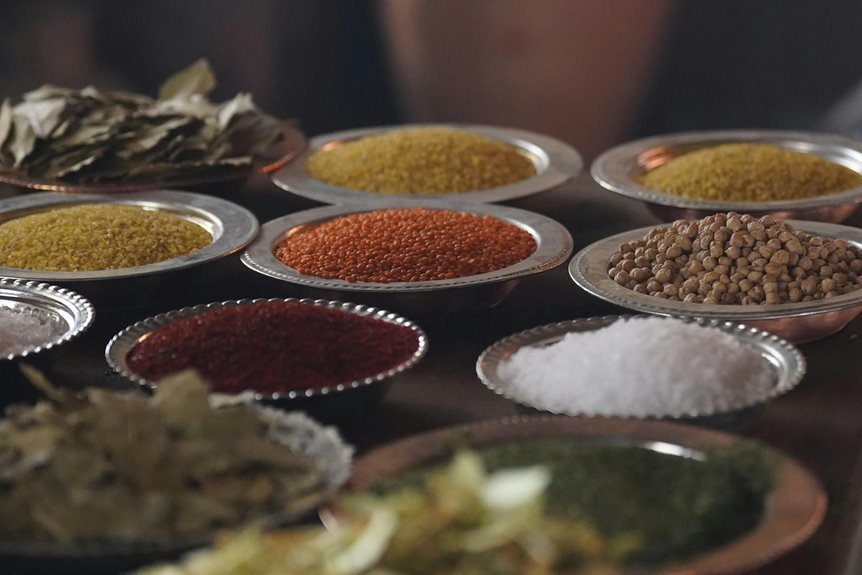
Nivhullshi centers on a core quartet: a grain or starch base, a protein or plant analog, a binding or emulsifying agent, and a seasonal aromatic framework. These elements establish structure, texture, and nourishment while guiding technique and outcome. Textural nuance, from smooth to chewy, emerges through deliberate pairing and moisture management. Flavor elevation relies on measured aromatics and subtle enhancers. Variants and substitutions test resilience and adaptability, inviting further examination of how each component shapes the overall balance.
Core Staples of Nivhullshi
The Core Staples of Nivhullshi are foundational ingredients that recur across traditional preparations, serving as the organism that underpins flavor profiles, texture, and nourishment. This analysis identifies recurring, essential elements, mapping their roles in balance and harmony. It notes enduring taste pairings and positions traditional staples within a coherent framework, enabling consistent technique, measurement, and predictable culinary outcomes.
Textural Accents to Build Depth
Textural accents function as deliberate interruptions to baseline mouthfeel, introducing contrasting surfaces that amplify perception of structure and depth. Systematic assessment identifies texture contrast as a primary driver of complexity, layering crunch, chew, and subtle grain. This approach emphasizes mouthfeel balance, ensuring tactile variety without overwhelming core flavors. The method supports consistent evaluation, scalable design, and disciplined refinement within the broader ingredient matrix.
Flavor Enhancers and Aromatics
Flavor enhancers and aromatics play a complementary role to texture by shaping the aromatic and taste profile that emerges after baseline mouthfeel is established. They function analytically, cataloging compounds, timing, and quantity to optimize perception. Substitutions offer alternatives without sacrificing balance, while adaptability governs responsiveness to ingredient variance, dietary constraints, and cultural expectations, ensuring consistent sensory outcomes across diverse preparations.
Variations and Substitutions for Adaptability
Variations and substitutions for adaptability enable consistent results across diverse ingredients and constraints. The analysis identifies modular ingredient groups, demonstrates controlled swaps, and documents performance outcomes under varying conditions. Subtopic relevance emerges through recipe-agnostic guidelines and measurable impact. Cross cultural adaptations are framed as parameterized options, preserving core properties while honoring regional ingredients and techniques. Systematic choices promote reliability and creative freedom simultaneously.
Frequently Asked Questions
What Are the Origin Stories Behind Nivhullshi Ingredients?
Origin myths describe Nivhullshi ingredients as rooted in cultivation legends and regional myths, revealing flavor heritage through systematic lineage analysis. The inquiry maps traditions, practices, and social meaning, noting evolving cultivation methods while preserving cultural autonomy and resonant culinary symbolism for an unconstrained audience.
Which Ingredients Are Seasonal Best for Nivhullshi?
Seasonal harvests dominate nivhullshi selections, with peak yields guiding choices; regional adaptations modulate flavor profiles and texture. The analysis shows best seasonal ingredients alignments, ensuring balance, consistency, and the sense of liberated culinary exploration across varied climates.
Are There Allergen-Safe Substitutions for Common Staples?
Allergen safe substitutions exist for common staples, enabling prepared flexibility. Systematically, these substitutions accommodate allergy considerations while preserving structure and flavor, offering alternatives that maintain function across recipes, thus supporting an audience seeking freedom in dietary choices.
How Do Regional Varieties Affect Ingredient Choices?
Regional varieties steer ingredient choices by regional harvest cycles and available kitchen sourcing, shaping flavor profiles and textures with disciplined adaptation; regional harvest calendars restrict or expand palettes, while kitchen sourcing guides procurement, consistency, and ethical sourcing strategies for broader culinary freedom.
What Storage Methods Preserve Nivhullshi Components Longest?
Storage method longevity is maximized by controlled temperatures and moisture levels; vacuum sealing, freezing, and cold storage provide the strongest preservation technique nuances. The analysis notes gradual degradation risks, urging systematic monitoring for optimal, autonomous preservation of nivhullshi components.
Conclusion
At the core, nivhullshi hinges on a disciplined quartet: a grain or starch foundation, a protein or plant surrogate, a binding/emulsifying agent, and a seasonal aromatic backbone. These elements synchronize to yield consistent texture, balanced mouthfeel, and scalable outcomes across cultures. Textural accents and flavor enhancers layer depth without derailing structure, while substitutions ensure resilience amid ingredient variance. The result is a precisely engineered culinary framework, endlessly adaptable, rigorously reproducible, and astonishingly robust in any kitchen, any season, any palate.
